
Two Pass Cope System
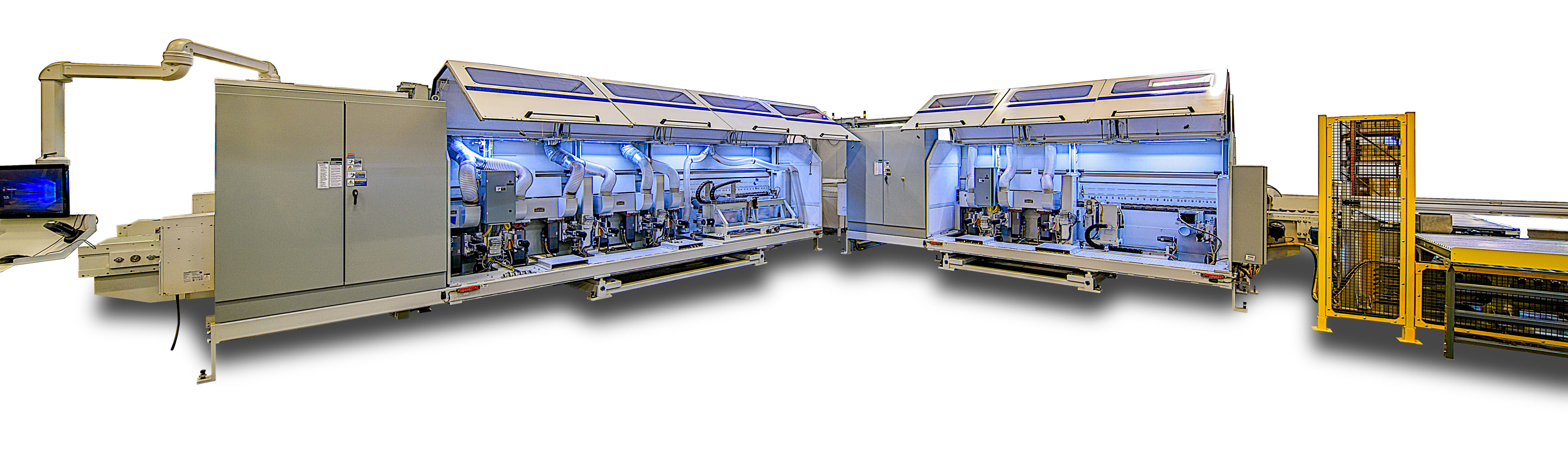
This two-pass system machines the end grain and lineal edges of solid wood components in one coordinated process. Components move through the first double end tenoner, across an automated transfer and into the second double end tenoner before reaching the outfeed stacking system.
- End-grain machine capacity from 7.75″ to 70″
- Lineal-edge machine capacity from 4.125″ to 36″
- Other Capacity Available
- Feed rates from 10 to 60 feet per minute
- 24 machining stations across two double end tenoners
- Automatic part-width and thickness measurement
- Servo-controlled guides, hold-downs and traverse adjustments
- Part printing, tool tracking and barcode-assisted tool changes
- Sound/dust enclosure around all cutting stations
End and Edge Profiling in One System
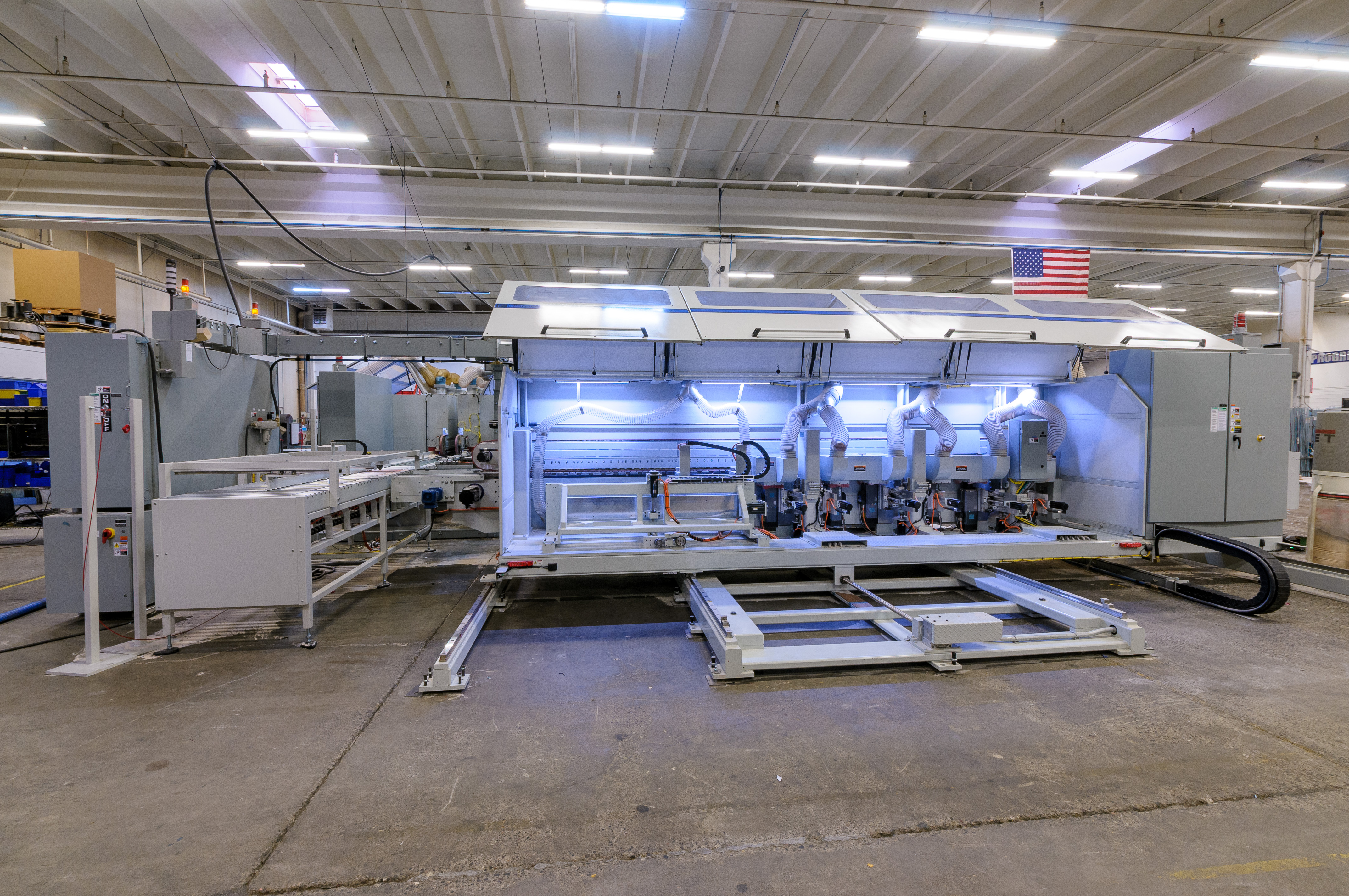
The first double end tenoner is configured for end-grain processing with seven stations per side. These include two trim-and-hog stations, two jump-cope stations, two cope stations and a traveling-notcher station. A powered transfer conveyor moves components to the second double end tenoner, which has five stations per side for trimming and hogging, coping, upper-tenon cutting and grooving.
Measurement and Servo-Controlled Adjustments
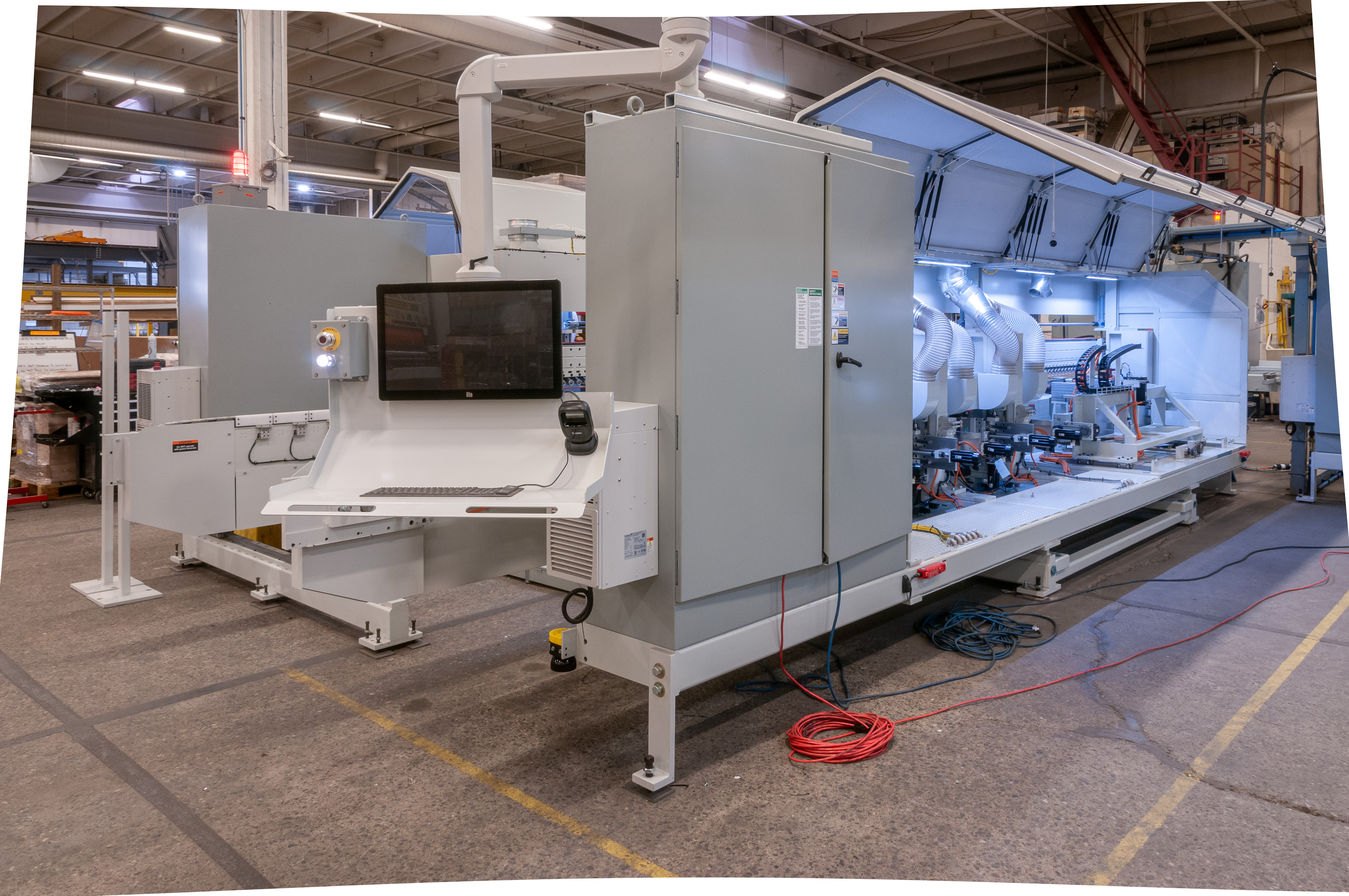
Part thickness is measured at the infeed and used to micro-adjust the cope tooling heights. Part-width measurement works with left and right servo-adjusted guides to center components before they enter the hold-downs and balance the cutting load. The adjustable machine side uses a servo-driven traverse system, while the Global Tweak feature positions all cutters and sanders by a designated amount to support corner blending.
Tool Tracking and Operator Controls
The machine’s touchscreen control provides feed-speed readout and adjustment. A wireless barcode reader identifies profile tools during manual tool changes, activates the tooling information and loads the corresponding tool parameters. Tool Tracker identifies each profile tool, records the lineal footage processed by that tool and saves the information in a spreadsheet. The system also includes part printing on two sides.
Machine Construction and Material Flow
Each double end tenoner is built on a one-piece welded box frame constructed from heavy-wall rectangular steel tubing. The adjustable sides travel on hardened steel rails with linear bearings, while the feed system uses Progressive Systems needle-bearing chains and self-lubricating chain rails. Powered infeed belts deliver individual components to the feed chains through metering stops.
The cutting stations are surrounded by sound and dust enclosures with hinged doors, LED lighting, inspection windows and electronic door-locking switches. After machining, dual servo-adjusted belt conveyors support continuous offloading and stacking before powered roller conveyors transfer the components out of the system.


